NATURE RECOVERY at SHOTOVER
1999 - ongoing
Tutsan
Orpine
Woodsage
Heath Milkwort
Heather
Mosses
Green Tiger Beetle
Aculeates (Bees, Wasps and Ants)
Acidic grassland
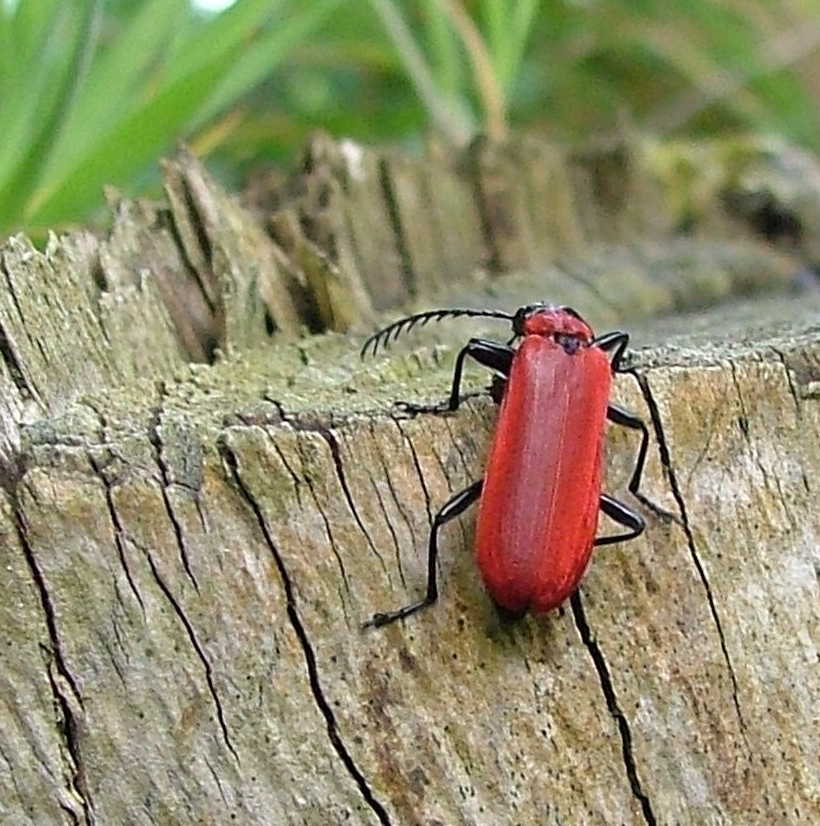
Saproxylic beetles and flies
Nature RecoveryShotover Wildlife has been engaged in Nature Recovery since 1999. This was a logical step once the organization had begun recording species at Shotover, and comparing the results with the large volume of historic data. In 2007, Shotover Wildlife was granted permission by Natural England and the landowner to propagate plant species that are particularly vulnerable in the SSSI, and reintroduce them whenever and wherever possible. The work is clearly important for safeguarding regional biodiversity and continues to this day.
[References:
‘Killick
et al. (1998)’ refers to Killick J., Perry R. & Woodell S. (1998)
The Flora of Oxfordshire. Pisces Publications.
‘Steel (1984)’ refers to Steel D. (1984)
Shotover: The natural history of a royal forest. Pisces Publications.]
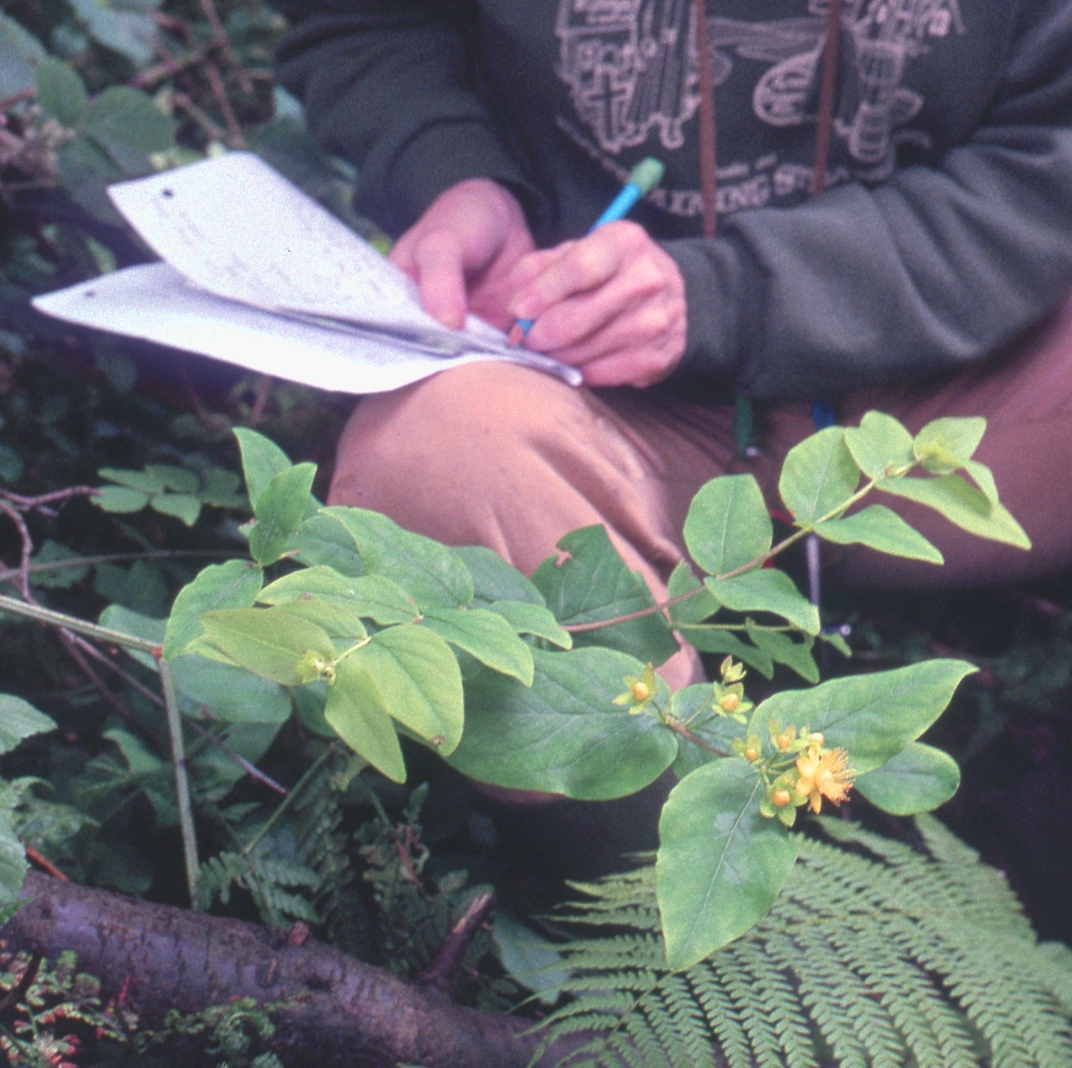
Tutsan
The discovery of Tutsan
Hypericum androsaemum on Shotover in 1998 had an influential role in the early days of SW. Following our wetland conservation work, a newly germinated Tutsan was found, and appeared to have responded to clearance work to let more sunlight into a marsh. Coincidentally, the newly published Oxfordshire flora by Killick
et al. (1998), suggested that Tutsan had become extinct at Shotover and had not been recorded on the hill since 1833. The appearance of Tutsan, and its probable link to carefully planned and monitored conservation work, was of seminal importance for Shotover Wildlife. It demonstrated that such work could produce results of historic and ecological significance, inspiring further similar effort, and leading to the founding of Shotover Wildlife in 1999.
Shotover Wildlife has since collected and stored viable seeds from this original Tutsan plant. The seed is of the purest possible provenance and unlikely to have derived from cross-pollination with garden varieties of St. John’s-wort.
Orpine
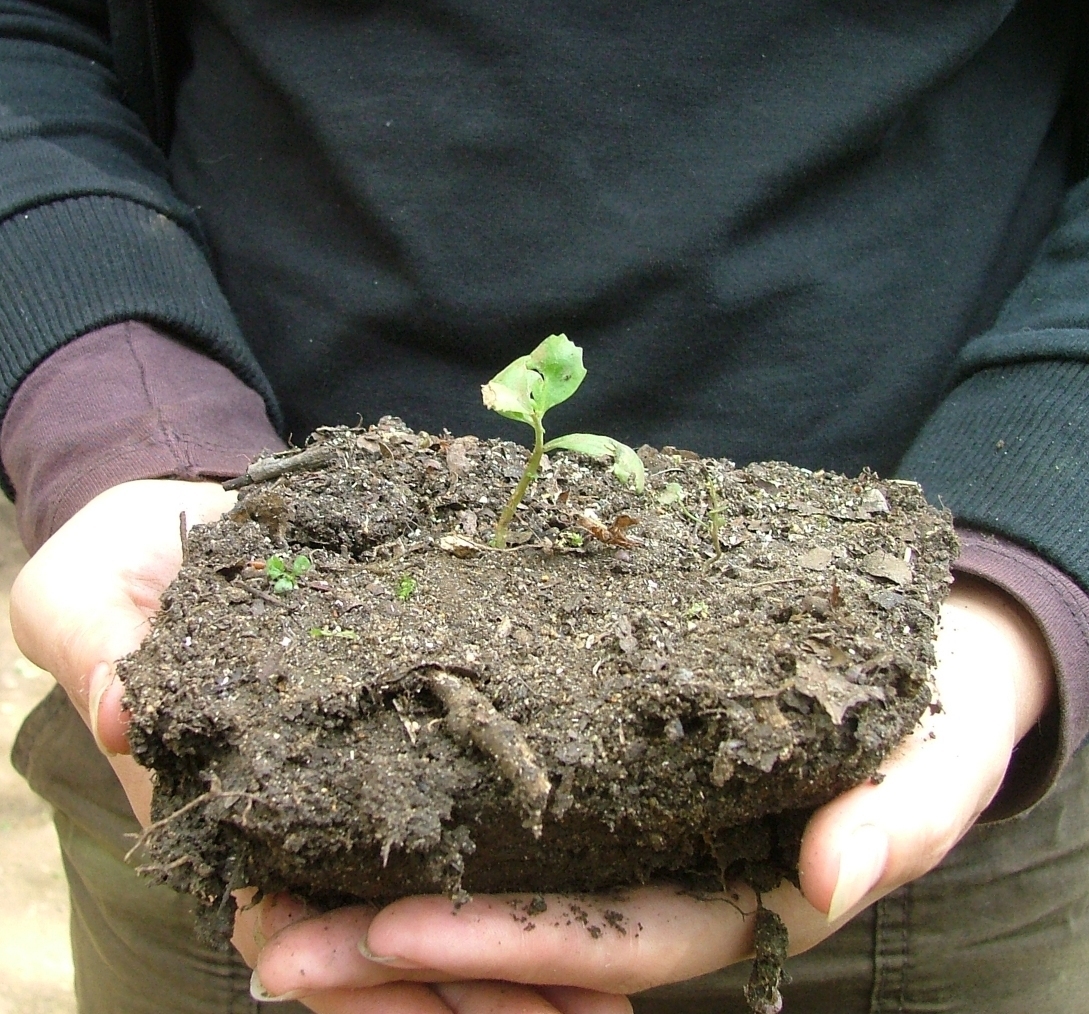
At a very early stage in Shotover Wildlife’s species recovery initiative, Orpine
Sedum telephium (a scarce plant in Oxfordshire) represented an iconic success. In 2000 it had become reduced to seven stems at a sole location in Brasenose Wood, and was clearly vulnerable on the side of a busy forest track. By 2006 the Orpine had declined to just a few stunted stems and was in need of urgent remedial action. And so, in 2007 a broken shoot (with just four leaves) was lifted, with its soil, and removed to a private garden. This action was a life-line for Shotover’s Orpine, because in the following year the remaining shoots in Brasenose Wood were flailed off and have never reappeared.
But good fortune prevailed! The translocated Orpine thrived in the private garden where it still grows today and has provided numerous clones for reintroduction. The first attempts at returning Orpine to Brasenose Wood were unsuccessful, being victims to the growing population of deer. However, with this knowledge, more recent introductions have become more sustainable by planting in places where access by deer is unlikely.
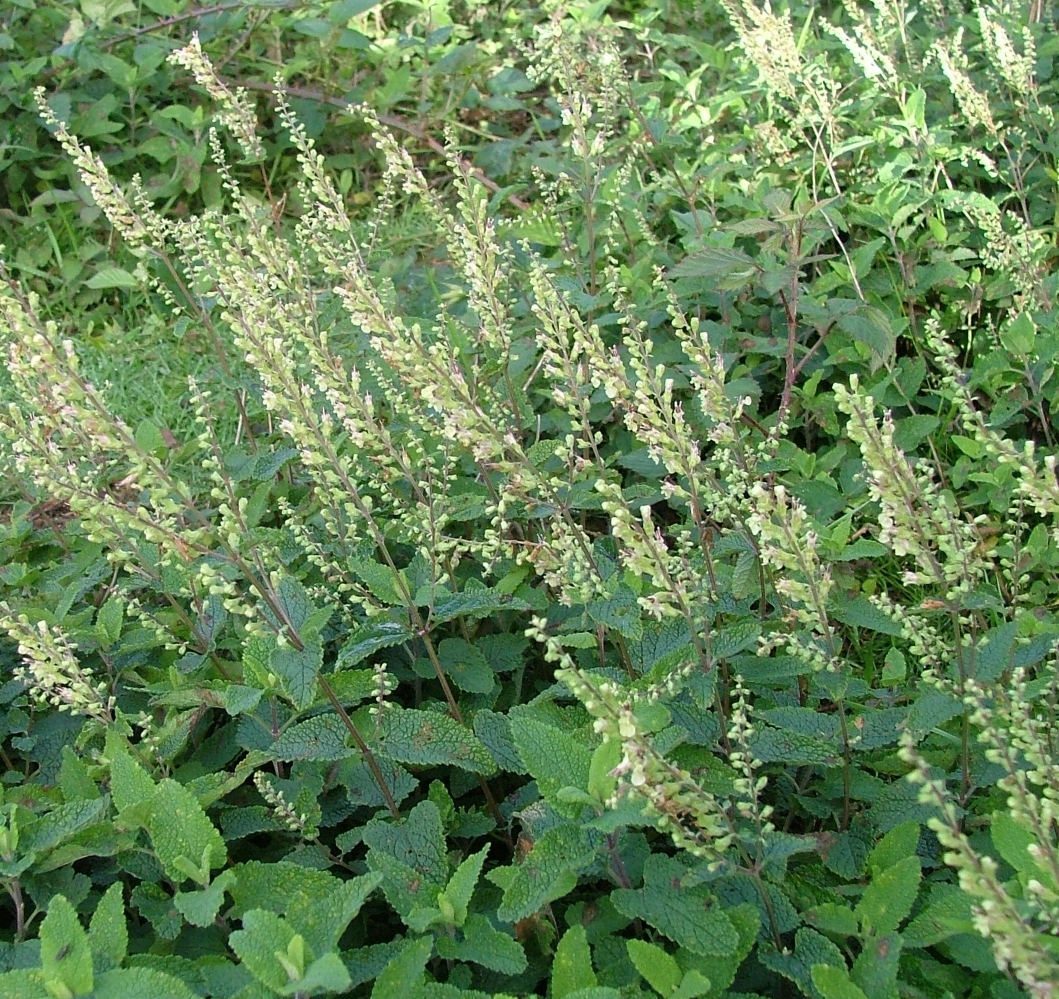
Woodsage
In the Oxfordshire flora by Killick
et al. (1998) Woodsage
Teucrium scorodonia is noted as ‘lost from Shotover’, and yet in 2001 was refound through Shotover Wildlife’s Adopt-a-Sector plant survey scheme. Although not a rare plant in the county, on Shotover it has only grown in one small area, struggling against gorse and bramble, and is frequently over-shadowed and prevented from flowering. Fortunately, Woodsage would appear to sustain a strong network of rhizomes and responds well to conservation work that increases access to light.
The main threat to Shotover’s Woodsage is its vulnerability at a single location, and for this reason (as with Orpine, above) a sample has been removed to a private garden from which vegetative clones are being produced for reintroduction.
Heath Milkwort Heath Milkwort
Polygala serpyllifolia was once frequent on acidic soils in Oxfordshire. In 1886, the botanist G.C. Druce described it as ‘
very typical on Shotover Hill’, but a century later Killick
et al. (1998) considered it to be rare in the county and ‘
lost from Shotover and elsewhere’. To our delight and surprise it was found newly germinated in an area of Shotover Wildlife’s heather regeneration work in Mary Sadler Field.
Further plants soon appeared in the vicinity of the first, and eventually in sufficient abundance to remove a small number of plants for propagation and relocation, adding to the security of the species on the hill. Shotover Wildlife has found that on-site relocation has been the most successful method, albeit with a very slow increase. Curiously a sample plant grown off-site produced a good number of seeds but they failed to germinate.
HeatherIt is likely that Heather
Calluna vulgaris has been present on Shotover hill for many centuries. In times past it was observed to grow in great profusion, but by the end of the 20th century it had declined to just a few small patches. The vulnerability for Heather at Shotover is caused by the gradual encroachment by bramble, gorse and bracken, as well as the occasional destruction by fire.
In recent decades, a typical method of increasing the coverage of Heather was by harvesting seeds for distribution. This works well as long as the flowers have ripe and viable seeds at the time of harvest. Much of the heath on Shotover today has been produced in this way, harvested from on-site heather, and made a reliable method through Shotover Wildlife’s understanding of when to collect the seed. Now, with the increased area of heath in the SSSI, there is a natural and rapid colonization of Heather into the bare soil and acidic grasslands created by Shotover Wildlife, so that the future for heather is now much more robust.
Mosses
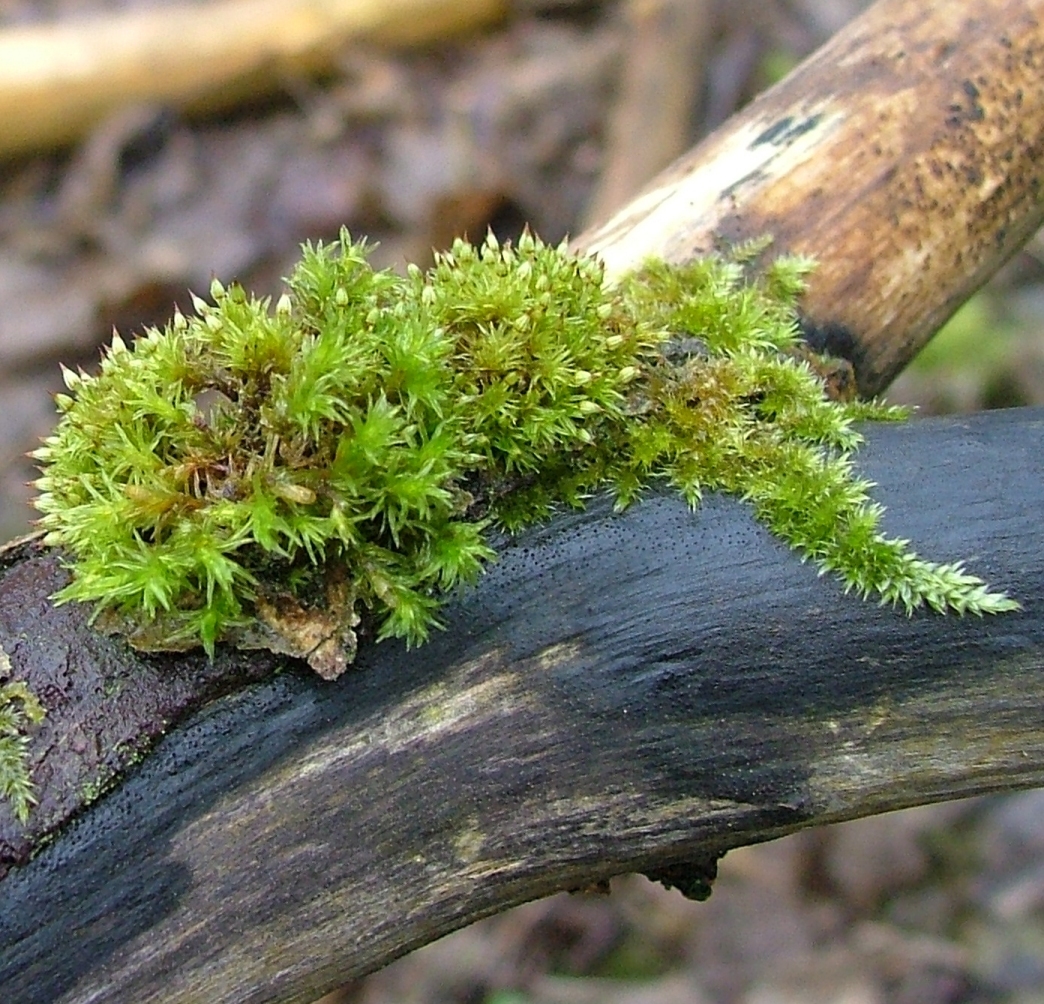
Shotover Wildlife has been running a Monitoring Programme for bryophytes – mosses and liverworts – since 2000, as a way of observing the diversity at Shotover in relation to population health and conservation management. For example, a number of mosses have returned after being noted by Steel (1984) and Killick
et al. (1998) as having become extinct on the hill. In respect of conservation work, lower plants have proven to be very responsive to Shotover Wildlife’s restoration of bare soil and acidic grassland.
The bryophytes of heathland are seldom seen elsewhere in the county due to lack of suitable substrates; but at Shotover, the specialness of acidic sandy soil is recognised and managed to enhance the biodiversity of this nationally threatened habitat.
Shotover Wildlife’s creation of bare soil in carefully selected locations has provided the ideal conditions for a suite of associated mosses. These include
Polytrichum piliferum Bristly Haircap, the rapid colonizer of acidic soil, and
Pogonatum nanum Dwarf Haircap, which is just a few millimeters tall and had not been recorded on Shotover for over 200 years. While conditions remain ideal, both of these mosses produce spores; yet are sensitive to competition and soon give way to other plants that colonize bare soil. In time, however, on the return of suitable conditions these diminutive plants thrive again from the spores that lay dormant in the soil.
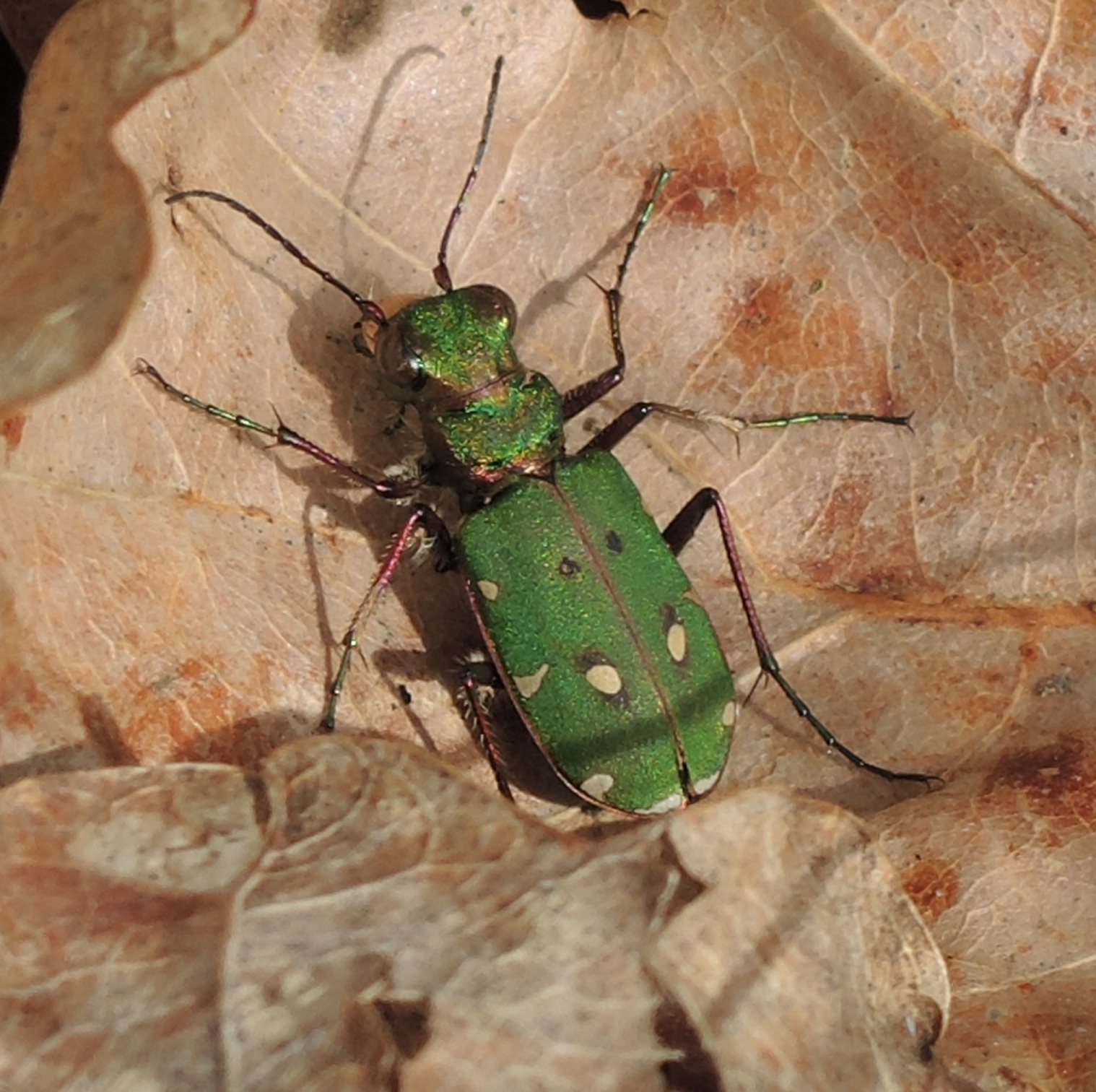
Green Tiger Beetle
The arrival of a long-lost insect usually occurs as the secondary result of habitat restoration. The Green Tiger Beetle
Cicidela campestris, which had not been formally recorded on the hill since the 1980s and thought lost, is one such case. Those who remember this distinctive beetle on Shotover often ask if it is still around, and are dismayed by the thought of its absence. But to the delight of many, it was seen in some numbers in 2011, and in every year since, mostly on the large areas of bare soil newly created by Shotover Wildlife on Horspath Common.
The opinion of local coleopterists is that the ‘new’ Tiger Beetles at Shotover are probably derived from an unknown colony somewhere else on the sandy strata of the hill; its arrival from a more distant colony being less likely. However, regardless of the source location, Shotover’s population of Tiger Beetle is now considerably more robust than at any time in the past 30-40 years due to the habitat improvements delivered by Shotover Wildlife.
Aculeates (Bees, Wasps and Ants)
For many years Shotover has been considered an important area for its diversity of aculeates. In 2005, a study by Shotover Wildlife demonstrated that when comparing the aculeate fauna of the early 20th century (published in 1939) with that of survey work from 2000-2004, it was found that the number of soil nesting species had declined, while the above-ground nesting species had increased. The study concluded that this change was coherent with the 100 years of natural succession from short-grazed vegetation with exposed bare soils to closed canopy secondary woodland. This then posed the conservation question: would it be possible to increase the diversity of soil nesters while not compromising other species?
In line with our overall objectives for the SSSI, since 2005 Shotover Wildlife has worked to increase the area of acidic grassland and safeguard the flora and fauna of this locally scarce habitat. Such work inevitably exposes bare soil and has helped to deliver the habitat improvements required for soil nesting bees and wasps.
The results have been very encouraging. Compared to the 104 soil nesting species published for Shotover in 1939, and the subsequent 4% decrease to 100 species by 2005, further monitoring has indicated a 16% increase to 121 species in 2024. Over the same period, the above-ground aculeates have not changed significantly, being 6% higher than in 1939.
Acidic grassland
‘Lowland acidic grassland’ declined significantly in Britain during the 20th century due to building development and an expansion of arable cropping made possible by the use of artificial fertilizers. This type of grassland was considered unproductive, and was generally under-appreciated as a wildlife habitat. More recently it has become recognized in the UK as a ‘priority habitat’ due to its decline, rarity and the associated flora and fauna.
On Shotover in the 20th century this locally unique habitat was much appreciated by local naturalists; however, without any conservation management the open grasslands changed during the subsequent decades (by natural succession) into bracken or closed-canopy secondary woodland. Since 2005 Shotover Wildlife has been re-establishing acidic grasslands within the SSSI, as prescribed by Natural England. Currently the habitat area is over 3.5 hectares, a three-fold increase from the 1.1 hectares in 2005.
Although this habitat restoration does not target any particular species, the increase in area is undoubtedly helping to establish and strengthen the existing associated flora and fauna, including rare and vulnerable species that are in national decline.
Saproxylic beetles and flies
An exceptional number of beetle and fly species (1,100 and 1,400) have been recorded on Shotover over the past century, with Shotover Wildlife contributing significantly to these totals since 1998. Yet it is only in recent years that the insects associated with dead wood – the saproxylic species – have been considered as a specific group especially in light of their notable decline in Britain.
Although targeted survey work by Shotover Wildlife has added many scarce saproxylic species to the records for Shotover, the overall fauna has probably remained unchanged for many decades. Therefore, there has not been a ‘recovery’ of nature in this respect, but in recent years there has undoubtedly been a great increase in the importance and appreciation of Shotover for hosting saproxylic species.
THE TARGET AREA
2026 - ongoing
The Target Area for Shotover Hill, as used by Shotover Wildlife, is mostly based on the 554 hectare Conservation Target Area (CTA) defined by the Thames Valley Environmental Records Centre in 2010. The CTAs, of which there are 29 in Oxfordshire, were devised to highlight important areas of 'priority habitat' in the county.
The Shotover CTA was devised to encompass the sandy and acidic soils on the hill
[see map], together with areas of old woodland. Generally excluded from the CTA were residential areas, including domestic gardens on or near the acidic sandy soils, even though they are very likely to contribute much to the ecology of the whole hill.
In the past, conservation and species recording have quite naturally focused on the SSSI (and public Country Park), and consequently has tended to over-shadow wildlife considerations for other parts of the hill. And yet the SSSI occupies only a quarter of the CTA, presenting an imbalance of understanding for other quality habitats in the larger area, including nature reserves, grazed land and innumerable private gardens.
The main objectives for this Target Area project are:
- to maximise knowledge of the different areas of land on Shotover and gain an understanding of the hill as a single ecological unit
- to survey areas of land - wherever permitted - that have previously gone unsurveyed or been left out of the original CTA
- to bring together all the species data to compare the differences and similarities between the SSSI and its surrounding habitats
RESOURCES
Much information already exists, including Shotover Wildlife’s database of 150,000 species records and detailed ecological knowledge of the SSSI. There has also been an ad hoc accumulation of records from the three satellite nature reserves (‘C.S.Lewis’, Horspath and Littleworth), grazed land, paddocks and private gardens. However, many areas remain unsurveyed, and outside the SSSI there are very few invertebrate records. Fortunately, many land owners and managers are keen to know about the wildlife in their ‘patch’, and this project is embarking on further surveys to provide specific detail, as well as the wider context, for the custodians of each parcel of land.
Over the last thirty years, Shotover Wildlife has become well known to many land owners and managers – representing most of the Target Area – and provides an ideal foundation for this project. SW is also fortunate in having taxa specialists within the organisation who have the skills to conduct surveys and identify species, and the comprehensive historic database to compare the differences and similarities in place and time. SW is also part of the national network of taxonomic specialists that can assist with a comprehensive coverage of species groups.
Ongoing field work, especially for areas outside the SSSI, is already returning important records, and has added new species for Shotover, as well as species not found in the SSSI. This early result supports the hypothesis that unique features of unsurveyed areas add significantly to the diversity of habitats in the Target Area. For instance, compared to the south-facing Country Park, the north side of the Hill is cooler with many wet flushes, steep-sided valleys, and open water both flowing and static. Furthermore, domestic gardens tend to be more rich in flowers (for invertebrates) compared to the acidic soils of the SSSI.
Information and survey results from across the Target Area are being fed back to stakeholders, and this is already increasing knowledge and a wider mutual celebration of Shotover’s exceptional wildlife.
PLANTATION - CARBON CAPTURE
By taking up carbon dioxide, all plants remove carbon from the atmosphere. In light of the climate crisis, there has arisen the widespread culture of planting a great many trees and so to store carbon in plantations - typically close-packed trees in straight rows and all of the same age.
However, without suitable management, a maturing plantation cuts off light to the ground and soon causes a marked loss of biodiversity.
2024 - ongoing
When presented with a biologically poor plantation of trees (see
Plantation - Biodiversity below), the challenge is how to let in more light, but without returning a felled tree’s stored carbon back into the atmosphere.
Shotover has large areas of plantation – just forty years old – where the shade has reduced the ground flora to almost zero, and is crying out for remedial action to restore biodiversity. Consequently, Shotover Wildlife has embarked on a pioneering scheme that tackles this problem – setting a high standard for a model solution.
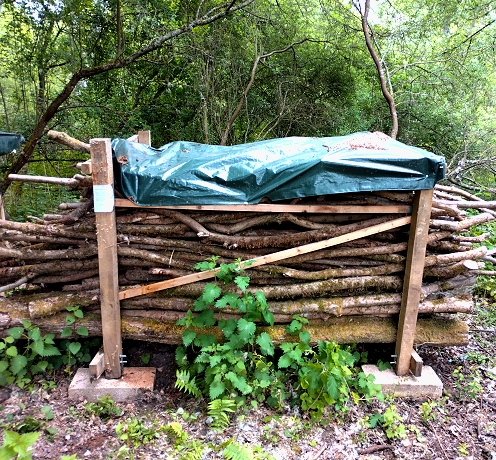
Our solution is to dry cut timber as quickly and naturally as possible, and so slow its degradation and store the tree’s carbon for as long as possible. We have been removing plantation trees and monitoring the improvement to biodiversity, whilst storing the felled timber in wooden frames or ‘clamps’.
The clamps keep the timber from touching the ground, and with all-round air circulation and a water-proof cover, the timber dries rapidly and carbon release through rotting is much reduced. Each filled clamp weighs about one tonne and can be transported by a ‘fork-lift’ tractor. The clamps can, therefore, be filled wherever conservationists are working and then taken to a holding area on site for long-term storage. Furthermore, the frames are made from timber sawn from oaks that grew on Shotover, often from naturally fallen trees that are unsuitable for other purposes.
In contrast to the above, schemes that encourage landowners to plant trees on their land are generally focused on the income derived from trading in Carbon Credits, and are incentivised towards a ‘net carbon’ balance rather than positive capture and storage. Also, most planting schemes take little heed of aftercare, future biodiversity or the ultimate fate of the timber.
PLANTATION - BIODIVERSITY
By taking up carbon dioxide, all plants remove carbon from the atmosphere. In light of the climate crisis, there has arisen the widespread culture of planting a great many trees and so to store carbon in large plantations - typically close-packed trees in straight rows and all of the same age.
However, without suitable management, a maturing plantation cuts off light to the ground and soon causes a marked loss of biodiversity.
2024 - ongoing
In the early 1980s four hectares of ‘brownfield’ land at Slade Camp was planted up with trees. This was just before the area became part of
Brasenose Wood and Shotover Hill Site of Special Scientific Interest (SSSI). After 1940, the land had been used as a military camp and temporary social housing.
The 1980s plantation was established over concern that the area might come under threat of development. In the years since planting, the trees received some early aftercare and were then left to become woodland. The resultant tree canopy has produced so much shade that almost all the ground flora has been lost.
Recognising the need for positive intervention, Shotover Wildlife conservationists have devised a management strategy that reduces the number of trees, stores the carbon (see
Plantation - Carbon Capture above), maximises the hydrological benefits to the area, increases biodiversity and creates pleasing views and clearings for visitors to enjoy.
By comparing the new clearings with nearby unmanaged plantation, it has been possible to evaluate the biological improvements. In just two years, we found that the ground flora had increased from 4 species to 35 and the abundance and species richness of ground-dwelling invertebrates had increased fourfold. Surveying by Shotover Wildlife is ongoing and as more species are found, the more we can provide the evidence that taking action to manage plantation woodland for biodiversity is positive, enjoyable and worthwhile.
THE ATLAS PROJECT
2010 - ongoing
The Atlas Project was launched in 2010, with the objective to establish a framework for
the accurate mapping of plant species on and around Shotover Hill, and at the same time
provide further opportunities for SW members’ in botanical surveying.
The resulting distribution maps aid understanding of species and habitats, support
publications, and help with the planning and delivery of student project work.
Inevitably, getting out to visit every 50m square in the Atlas area threw up some new
and interesting records such as the discovery of a fern that has not been recorded on
Shotover since Boswell noted it down in 1884.
Project features
- Over 450 vascular plants species included
- 600 fifty metre grid squares (150 hectares) including Brasenose Wood and Shotover Hill SSSI
- Shotover Wildlife’s long history of detailed surveying at Shotover has made it possible to import many thousands of records from previous work
- A new and accurate map of the area has been produced using multiple GPSs (Global Positioning Systems)
- Plant species surveying is based on the same multiple GPS system that has been used for the accurate mapping
- The mapping has illustrated the distribution of species associated with the various habitats of the area: heath, acidic grassland, woodland, marsh,
hedgerow and meadow.
Example: Click
here for a map showing the clear habitat preferences of Tufted Hair-grass across the SSSI.
'THEN & NOW' Project
2013 - 2015
Shotover Wildlife was one of the first groups in the UK to receive a 'Sharing Heritage' award from the Heritage Lottery Fund.
The Shotover Natural Heritage initiative focused on insects in particular, and had the opportunity to compare the results with the work of Oxford University naturalists of over 100 years ago.
This study follows in the footsteps of eminent Oxford naturalists of the Victorian and Edwardian era, who would travel the short distance to Shotover Hill to study the wildlife of this locally-unique habitat. Old diaries and field notebooks, preserved at the famous Hope Entomological Library at the Oxford University Museum of Natural History, have played a key role.
The project work has helped to establish a new benchmark of knowledge for the insect fauna of Shotover. Where survey work can be compared
with historic records of 100 years ago, these studies contribute important biological indications of a changing world.
~~~~~~~~~~~~~~~~~~~~~~~~~~~~~~~~~~~~~~~~~~~~~~~~~~~~~~~~~~~
"Shotover is very fortunate to have had so many eminent naturalists work here in the 19th and early 20th centuries. Following in the
footsteps of the early recorders not only establishes a fascinating link to the past, it is also an important record of how things have changed
over time."
Ivan Wright, SW Chairman
The Project Work
- field work on Shotover targeted at under-recorded species.
- assistance from visiting experts to help SW members with survey techniques.
- expert identification of target species.
- researching historic records of insects using old diaries and other archives.
- distribution of publications including new SW leaflets for the target species.
- training for local people in the surveying and study of insects.
Wildlife recorders are seldom able to place their results in the context of a long history of recording. This project was a rare
opportunity to engage more widely with the heritage aspect of their wildlife recording, and gave the community an additional and fascinating way
in which to appreciate the wildlife heritage of Shotover.
Notable results so far...
"Insect identification is always satisfying, but at an important site like Shotover, we quite often find something rare that hasn't been seen there for
over 100 years. We recently found a beetle 96 years to the week since its only other record on the Hill."
Ivan Wright, SW Chairman
Terrestrial Bugs (Hemiptera) training day
This was great fun as we were swept along by the trainer's limitless enthusiasm for all things entomological.
Yet in this short time we added 6 new Bug species to the all-time Shotover list and a species not seen since before 1939 - just what we needed for the
project.
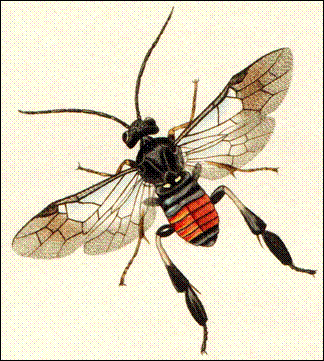
Among the new species was the sawfly
Croesus septentrionalis. The adult sawfly (see right) is about 9mm long, and has the femora and tibia of
its back legs expanded into wide flat plates, especially the male. The larvae are known for their curious display when threatened - all raising their
tales at the same angle.
Stunning results!
A NEW FLY TO BRITAIN
...and almost a new species to world science!
Our best result has been the recording of a new species of fly to Britain. The small leaf/stem mining fly, Ophiomyia skanensis was caught in Long Marsh in 2013 and identified a our commissioned dipterist. Ophiomyia skanensis was first recognised about 40 years ago from a specimen in Scandinavia, and since then has been recorded just a few times in central Europe.
Our most tantalising result is the possibility of a new species to science, but unfortunately this is on the basis of a single specimen of a fly and does not represent enough material for the naming of a new species.
Both flies were a product of our popular Sunday insect sorting sessions. Indeed these sessions have been a major contribution to the project and our diptera records. This aspect alone has added 220 previously-unrecorded species to the Shotover list, and a further 80 species not recorded since the 1920s.
True Flies training day
This day was also very productive. Again new species were added to the all-time Shotover list, including a scarce Tachinid fly,
Nowickia ferox, at
Long Marsh.
Historic record
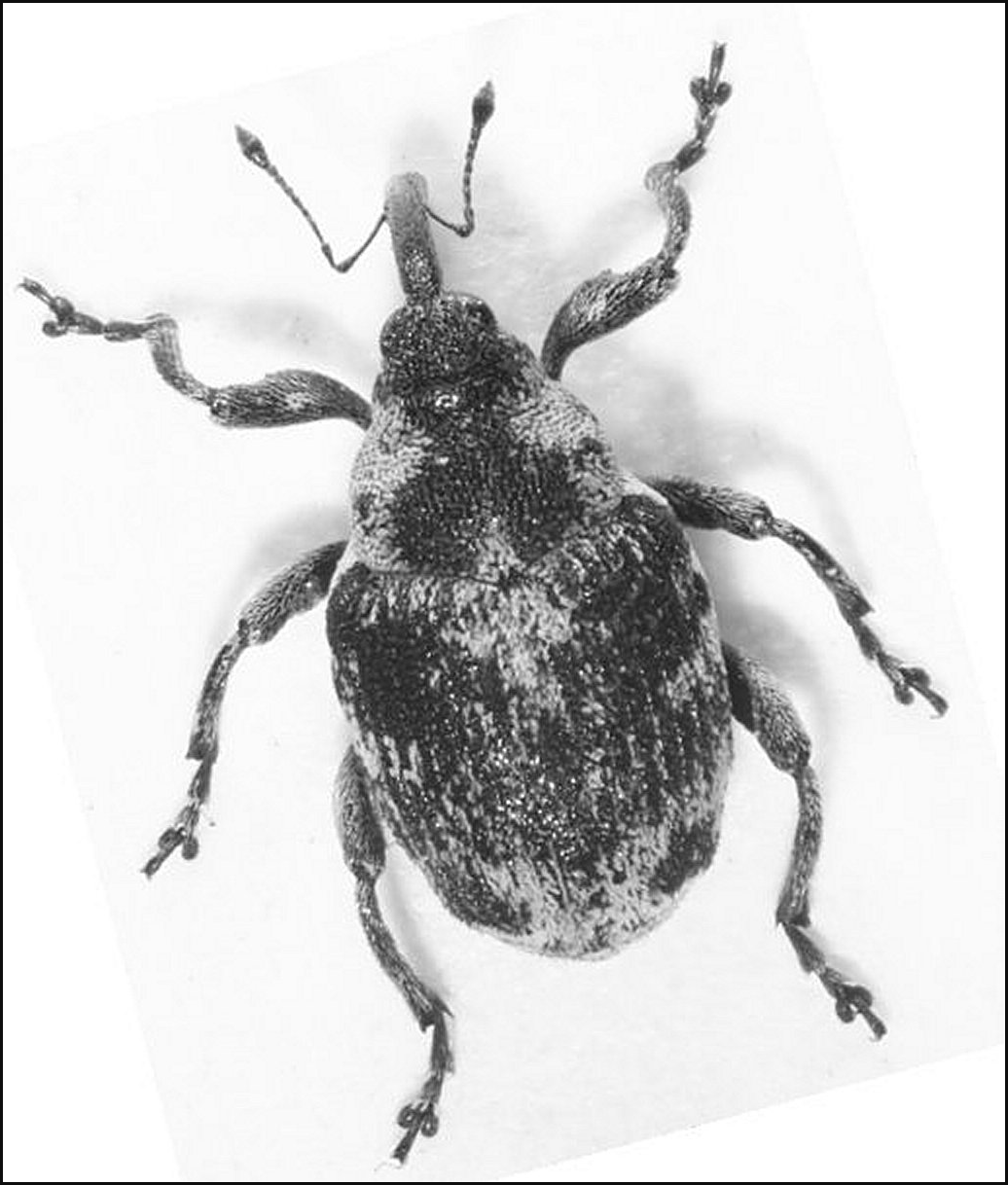
On one of the regular Shotover Wildlife '2nd Sunday' Field Days, one of our members netted the small weevil
Hadroplontus litura (see left).
This beetle had only been recorded once before on Shotover - by Commander J.J.Walker - 96 years earlier!
Results from beetle surveying have been spectacular. Over 12 years SW has doubled the number of known beetles on Shotover to over 1000 species! Yet
over 200 of these species have not been seen since 1930. Re-recording rare species that haven't been seen on Shotover for 100 years is not only important
for the habitat, but is also very satisfying for those involved.
Useful Links: SW Leaflets -
Venerable Naturalists on Shotover (572KB).

ANCIENT TREES
2005 - ongoing
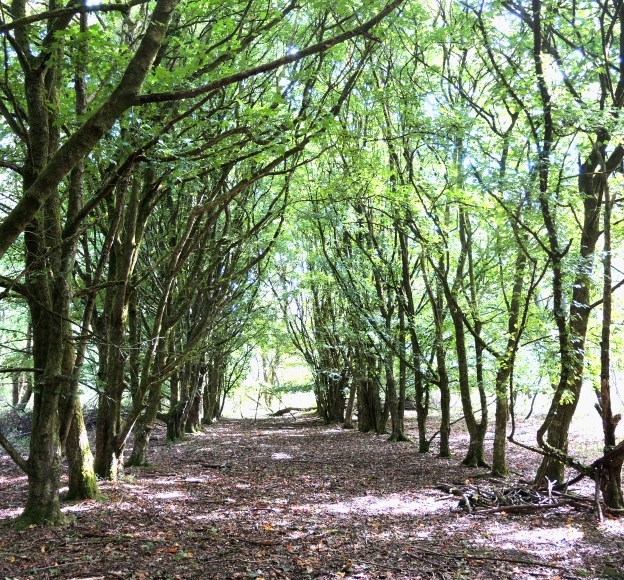
The aim of the project has been to record the trees on and around Shotover that have historic, cultural and wildlife interest and to explore the great diversity of wildlife that these grand old structures support.
The project has helped raise awareness of our most special trees for the enjoyment of
future generations. Here are
some of Shotover's
ancient trees.
Grassland Habitat Project
2007 - 2011 (plus aftercare)
Shotover Wildlife has delivered an important project to convert areas of bracken to
acidic grassland in Shotover Country Park and Horspath Parish.
Lowland acidic
grassland (
footnote 1) is a nationally recognised habitat, and is characterised by short grass,
locally rare flowers
(
footnote 2) that are specific to the new habitat, and patches
of bare soil. The bare soil is particularly important for
Shotover’s rare insects
(
footnote 3). Compared to the areas of bracken, the
improvement to wildlife diversity has been considerable.

An integral part of this project has been to create pleasant new places to sit, and
areas to enjoy, while walking on Horspath Common.
The project has been enthusiastically supported by naturalists for two reasons. Firstly,
the area is within a
SSSI (
footnote 4), and secondly,
much of the wildlife that is benefitting from the project has declined in the UK from loss
of habitat. Although most of these species are already on Shotover, many are in decline
here too. This is because the acidic grassland of the past has been gradually replaced by
bracken and scrub since grazing ceased in the last century.
Over recent years, and particularly in 2008, members of Shotover Wildlife surveyed
and recorded wildlife over the whole area to make sure that the work would not harm
existing plants or animals. Also, by comparing our work with that of
previous
naturalists (
footnote 5) we were able to get an idea of how species
have declined or been lost over time, and investigate the reasons for these changes.
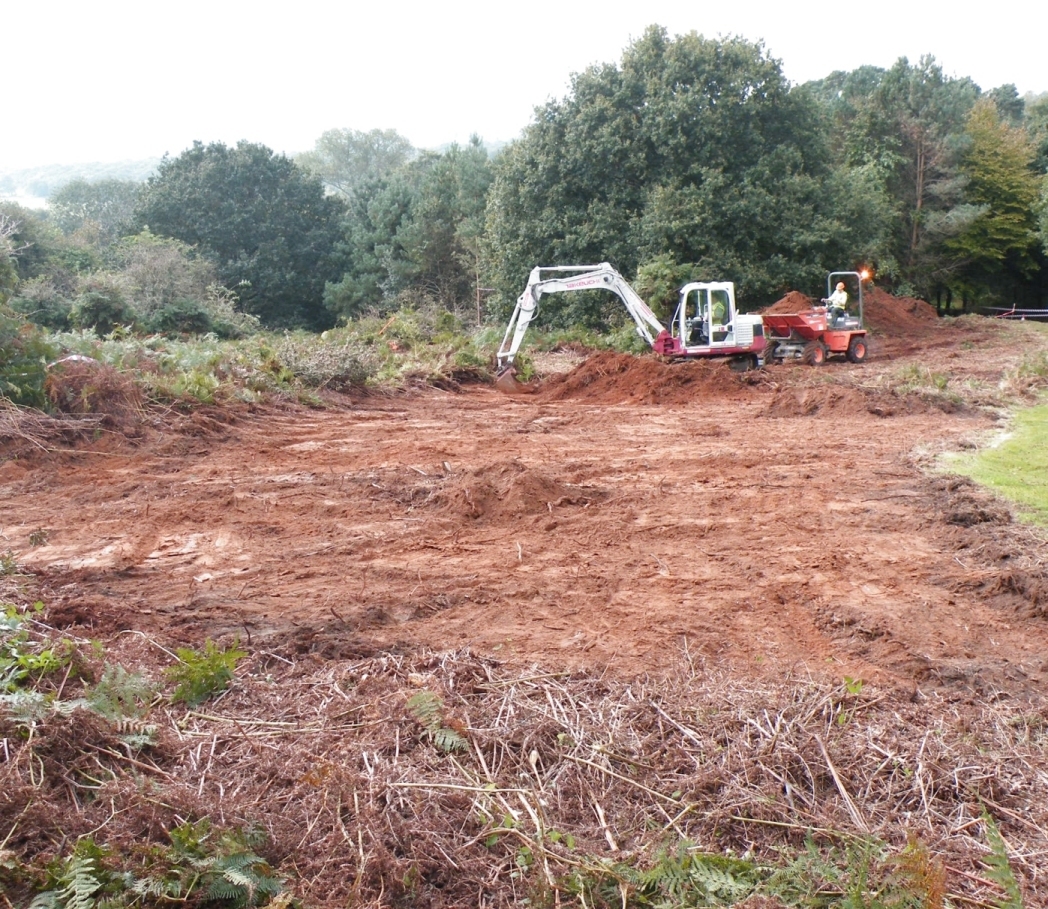
Most of the heavy project work was done by mechanical excavator, and has removed the
bracken and topsoil. This material was used to create special new habitats for a
variety of animals.
The Shotover Wildlife Grassland Habitat Project was supported by the Trust for Oxfordshire's Environment and the Waste Recycling Group through the Landfill Communities Fund.